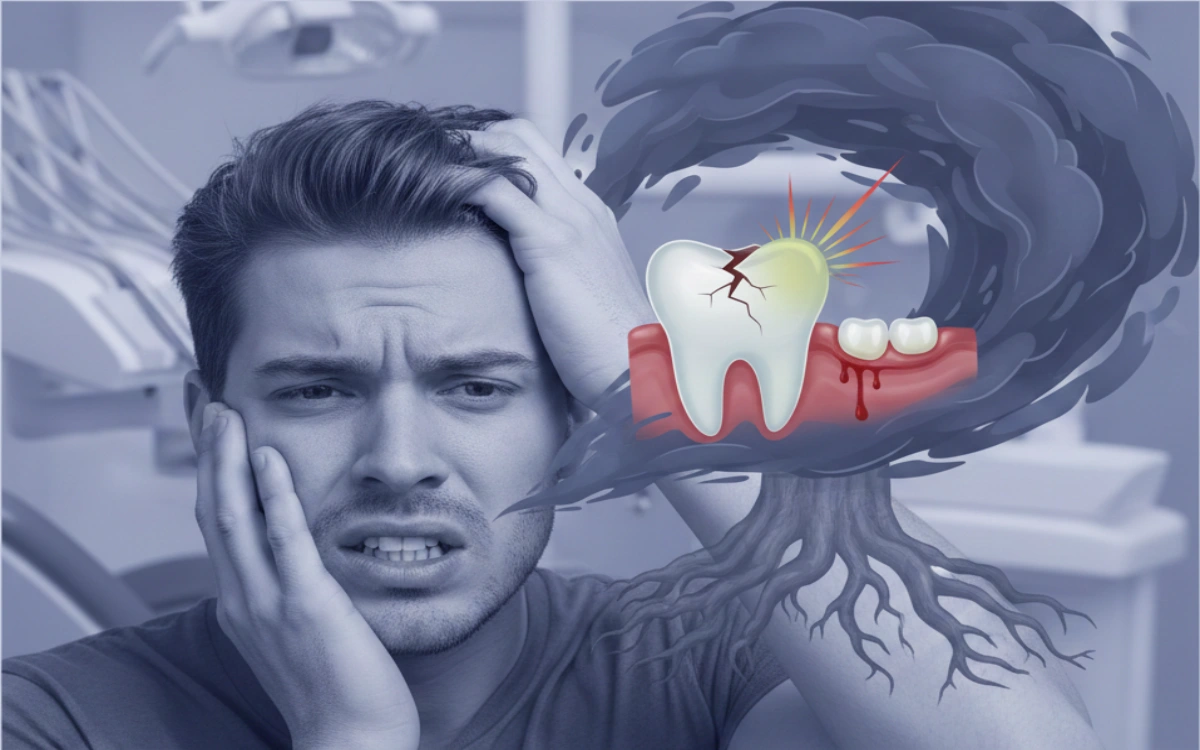

Many people experience stress-related oral health issues without realising that emotional pressure is directly affecting their teeth and gums. You may feel tension in your jaw, notice headaches when you wake up, or observe that your gums bleed more easily. These changes often appear quietly during stressful phases of life, even if you maintain the same brushing and flossing routine.
Stress affects the body in ways that extend far beyond the mind. Hormones shift, sleep becomes disrupted, immunity weakens, and our daily habits change. All these factors come together and influence the health of your mouth. Once you understand how stress affects your teeth and gums, managing these symptoms becomes far easier, and you can protect your oral health before real damage occurs.
How Stress Affects Your Mouth
Stress changes how your body functions. The rise in cortisol weakens your immune system, which means your gums find it harder to fight off infection and inflammation. Tension often leads to clenching or grinding, especially during sleep, placing excessive pressure on your teeth.
Stress also disrupts daily routines, which means oral care becomes inconsistent. Many people snack more, drink more caffeine, sleep less, and feel too overwhelmed to maintain their usual hygiene habits. These behaviour changes can lead to faster plaque buildup and new dental problems.
Common Oral Health Problems Linked to Stress
Stress can affect your teeth and gums in several ways. Some symptoms are mild, while others can lead to long-term problems if ignored.
Teeth Grinding and Jaw Clenching (Bruxism)
This is one of the most common reactions to stress. You may grind your teeth at night or clench your jaw during the day. Over time, this can lead to:
• Worn or flattened enamel
• Cracks or chips in teeth
• Jaw pain or stiffness
• Headaches that begin at the temples
• Clicking or discomfort around the jaw joint
If you wake up tired or with jaw pain, grinding is likely playing a role.
Gum Inflammation and Gum Disease
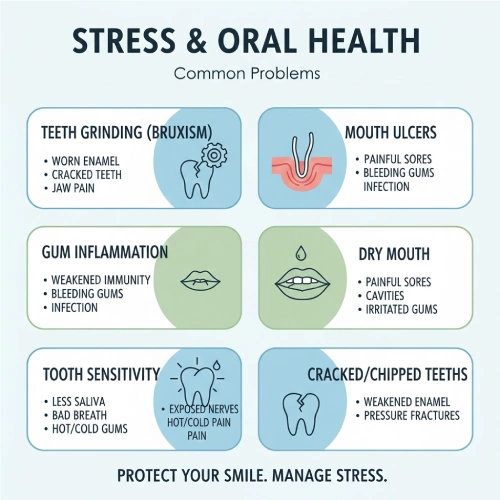
Chronic stress weakens the immune response. This makes the gums more prone to swelling, bleeding, redness, and infection. People who already have gum irritation may notice that symptoms worsen during stressful periods, making stress gum disease more common than many realise.
Mouth Ulcers
Small, painful ulcers or sores often appear when your stress levels rise. They usually heal within a few days but can make eating or talking uncomfortable.
Dry Mouth
Stress affects saliva production. Saliva plays a key role in washing away bacteria and protecting enamel. A dry mouth can lead to:
• Bad breath
• Increased risk of cavities
• Irritated gums
• Faster bacterial growth
Tooth Sensitivity
Stress-related grinding or gum recession exposes the inner layers of the teeth. This leads to sharp discomfort when eating or drinking something hot, cold, or sweet.
Cracked or Chipped Teeth
People under stress may chew harder, bite objects absentmindedly, or grind heavily at night. Weakened enamel is more likely to crack under this pressure.
Why Gum Disease Worsens During Stress
Gum disease progresses faster when the immune system is compromised. Stress reduces your body’s ability to control inflammation, which allows plaque and bacteria to irritate your gums more easily. Lack of sleep, poor diet, smoking, and increased sugar intake during stressful phases all contribute to worsening gum symptoms.
When stress continues for weeks or months, the gums often show the first signs of trouble.
How to Manage Dental Stress and Protect Your Oral Health
Managing stress begins with awareness. Once you understand your triggers and the way your mouth reacts, you can take steps to prevent long-term damage.
Use a Night Guard for Grinding
If you grind your teeth at night, a custom night guard protects the enamel and reduces jaw tension. Many patients feel relief within days of wearing one.
Maintain a Consistent Oral Hygiene Routine
Stress disrupts routines, but this is when your mouth needs care the most. Brushing twice a day with fluoride toothpaste, flossing daily, and cleaning the tongue help keep plaque under control.
Stay Hydrated
Water helps with dry mouth and washes away food debris. It also reduces the impact of caffeine and sugary drinks often consumed during stress.
Limit Sugary and Acidic Snacks
Stress cravings often involve sugar or processed foods. These weaken enamel and feed harmful bacteria. Being mindful of snacking helps keep your mouth in balance.
Practise Jaw Relaxation Techniques
Gentle stretching, warm compresses, and slow breathing exercises help reduce clenching. Try relaxing your jaw throughout the day by keeping your teeth slightly apart and your lips closed.
Create a Calming Evening Routine
Stress peaks at night. A simple wind-down routine helps reduce grinding during sleep. Warm showers, reading, or listening to calming music can make a noticeable difference.
When Stress Symptoms Should Not Be Ignored
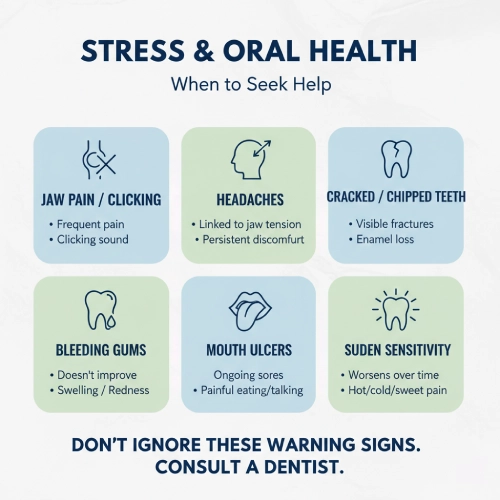
Some symptoms signal that stress has already caused damage. Seek professional help if you notice:
• Frequent jaw pain or clicking
• Persistent headaches linked to jaw tension
• Cracked or chipped teeth
• Bleeding gums that do not improve
• Ongoing mouth ulcers
• Sudden sensitivity that worsens
These could indicate gum disease, severe grinding, enamel loss, or other issues that require timely treatment.
Dental Treatments That Can Help
If stress has affected your oral health, your dentist may recommend personalised treatments to restore comfort and protect your teeth.
A night guard helps manage grinding and protects the enamel. Professional cleaning removes plaque and bacteria that accumulate during stressful periods. Gum therapy supports healing if gum disease is present. Fluoride treatments help strengthen weakened enamel and reduce sensitivity. If grinding has caused cracks or wear, bonding or fillings may be needed to restore tooth structure. Bite adjustments also help redistribute pressure across your teeth.
Sometimes managing stress requires support beyond dental treatment. Dentists often encourage a holistic approach where emotional stress and oral symptoms are addressed together.
Long-Term Habits for Keeping Your Mouth Healthy During Stress
Long-term oral health comes from consistency. Regular dental check-ups help identify early signs of stress-related damage. Staying hydrated, choosing balanced meals, and limiting caffeine and alcohol help maintain oral balance. Being mindful of clenching during the day and protecting your teeth at night reduces the impact of grinding.
Stress may come and go, but the habits you build now help protect your teeth through every phase of life.
Conclusion
Stress oral health issues are incredibly common, but with the right habits and timely care, they can be managed effectively. For personalised treatment and guidance, you can Call Us or text us on WhatsApp to book an appointment at MedDental Clinic Dubai. The team is here to help you manage dental stress and maintain a healthy smile with confidence.