

Many patients ask which foods support oral health naturally, and the truth is that your diet plays a powerful role in keeping your mouth healthy. The right nutrients can strengthen enamel, protect the gums, improve bone health, and reduce inflammation. When you choose the right meals daily, you support everything from saliva flow to tooth mineralisation. This is why understanding foods for healthy teeth gums is just as important as brushing and flossing.
Eating well is not about following complicated rules. It is about adding nutritious ingredients that protect your enamel, nourish your gums, and support your jawbone. Simple dietary habits, practised consistently, can help prevent common dental concerns like gum disease, tooth decay, sensitivity, and enamel erosion. In this guide, we explore which foods help keep your smile strong and how you can incorporate them into your everyday routine.
Why Your Diet Matters for Oral Health
Your teeth and gums are living structures. They respond to minerals, vitamins, hydration levels, and even the balance of bacteria in your mouth. When your diet lacks essential nutrients, the enamel becomes weaker, gums become more prone to infection, and healing slows down. Conversely, when your diet is balanced and nutrient-rich, your mouth gains resilience against damage.
Certain minerals strengthen the tooth’s outer layers, while specific vitamins support gum tissue and reduce inflammation. A healthy diet also helps maintain saliva production, which plays a vital role in neutralising acids and washing away bacteria. Even the textures of some foods support oral health by encouraging natural cleaning.
Once you understand which nutrients your teeth rely on, choosing the right ingredients becomes much easier.
Calcium-Rich Foods for Teeth: The Foundation of Strong Enamel
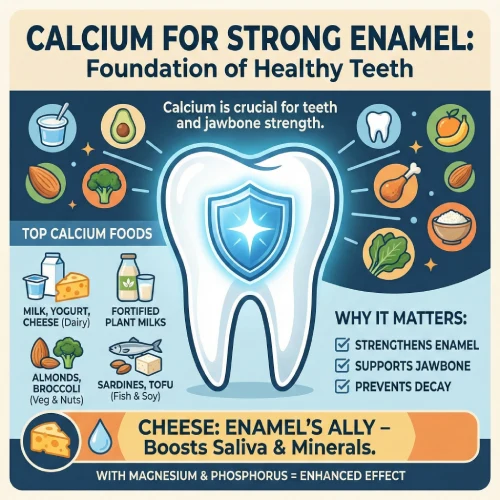
Calcium is one of the most important minerals for oral health. Your teeth and jawbone rely on calcium for strength and stability. Without enough calcium, enamel becomes thin and more prone to decay, while the bone supporting the teeth becomes weaker.
Some of the best sources of calcium include:
• Dairy products such as milk, yoghurt, and cheese
• Fortified plant-based milks
• Almonds
• Broccoli and okra
• Sardines with bones
• Tofu fortified with calcium
Cheese is especially beneficial because it supports mineral balance in the mouth and encourages saliva flow. When paired with other enamel-supporting nutrients like magnesium and phosphorus, calcium becomes even more effective.
Vitamin C Gums: Protecting Soft Tissue and Reducing Inflammation

While calcium is crucial for tooth strength, vitamin C is essential for gum health. Your gum tissue relies on vitamin C for collagen production, healing, and resistance against inflammation. When vitamin C levels drop, the gums become more vulnerable to bleeding, swelling, and infection.
Foods rich in vitamin C include:
• Oranges, lemons, and limes
• Strawberries and kiwi
• Bell peppers
• Broccoli
• Tomatoes
• Guava
These fruits and vegetables help maintain firm, healthy gum tissue. They also offer antioxidant protection, which reduces the inflammation commonly associated with early gum disease.
Leafy Greens for Oral Health: Powerhouses of Vitamins and Minerals
Leafy greens are some of the most nutrient-dense foods available, which is why they are among the most recommended leafy greens for oral health. Spinach, kale, collard greens, rocket, and Swiss chard provide vitamins A, C, and K, along with calcium, folate, and fibre.
These nutrients collectively support gum healing, enamel resilience, and bone strength. Leafy greens also require more chewing, which naturally stimulates saliva production. This helps neutralise acid and protect enamel from erosion.
Adding even a handful of leafy greens to your meals daily can make a visible difference to your oral health.
The Best Foods for Strong Teeth: Everyday Ingredients That Make a Difference
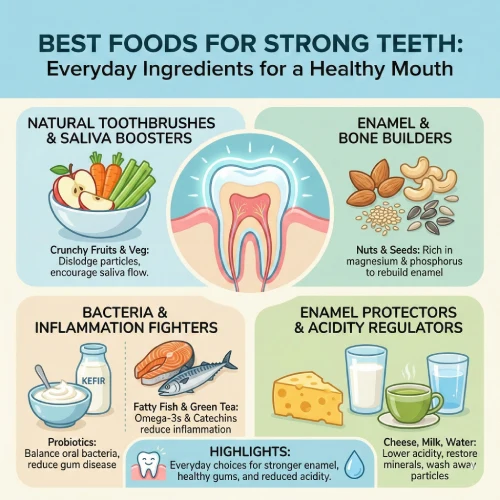
Beyond calcium and vitamin C, several other foods contribute to healthy teeth and gums. Including them regularly gives your mouth the nutrients it needs to stay strong.
Crunchy Fruits and Vegetables
Apples, carrots, and celery play a dual role. They offer vitamins and fibre while acting as natural toothbrushes. The chewing action helps dislodge food particles and encourages saliva, which helps clean the mouth.
Nuts and Seeds
Almonds, sesame seeds, cashews, and sunflower seeds offer healthy fats, calcium, magnesium, and phosphorus. These minerals help rebuild enamel and support bone structure. Nuts also make a good snack alternative to sugary or acidic foods that harm enamel.
Yoghurt and Fermented Foods
Probiotics in yoghurt, kefir, and certain fermented foods help balance oral bacteria. A healthy bacterial environment reduces the risk of gum disease and bad breath.
Eggs
Eggs provide vitamin D, which helps your body absorb and use calcium effectively. Without vitamin D, even a calcium-rich diet cannot reach its full potential.
Fatty Fish
Salmon, mackerel, and sardines deliver omega-3 fatty acids, which help reduce gum inflammation and support periodontal health. These fish also contain vitamin D, adding double benefits for enamel strength.
Foods That Protect Enamel and Reduce Acid Exposure
Some foods help protect your teeth not because of their nutrient content but because of how they interact with saliva and acidity.
Cheese and Milk
These lower acidity in the mouth, reducing the harmful effects of acidic foods. They also help restore minerals to the enamel.
Green Tea
Green tea contains catechins, which naturally fight bacteria and reduce inflammation. While any tea can stain teeth if consumed excessively, green tea offers benefits when enjoyed in moderation.
Water
Water supports saliva production and washes away food particles. Drinking water throughout the day helps maintain a neutral environment in the mouth.
Habits That Help You Get the Most Out of a Tooth-Friendly Diet
Eating the right foods is only part of the picture. How you consume them also matters. Simple habits can make your diet even more beneficial.
Pair Acidic Foods With Protective Foods
Citrus fruits, berries, and tomatoes are healthy but acidic. Eating cheese or nuts after acidic foods helps balance pH levels in the mouth.
Choose Whole Foods Over Processed Snacks
Whole foods provide nutrients that strengthen enamel and gums, while processed snacks often contain sugars and acids that encourage decay.
Avoid Constant Snacking
Frequent snacking keeps acid levels high. Giving your mouth breaks allows saliva to repair the enamel naturally.
Stay Hydrated Throughout the Day
A hydrated mouth is a protected mouth. Water supports saliva and helps reduce bacterial activity.
When Diet Is Not Enough: Signs You Need Professional Support
Even with a healthy diet, some people experience persistent issues such as:
• Bleeding or swollen gums
• Tooth sensitivity
• Receding gumlines
• Frequent cavities
• Chronic bad breath
These may indicate underlying conditions such as gum disease, enamel erosion, or vitamin deficiencies. A dental evaluation helps determine whether diet alone can support your needs or whether professional intervention is required.
Regular cleanings also help remove plaque and tartar that food choices cannot address alone. Combining a nutrient-rich diet with professional guidance offers the strongest protection for your oral health.
Building a Diet That Supports Long-Term Oral Health
The goal is not to follow strict food rules but to create a balanced approach that keeps your gums firm and your enamel strong. With a little planning, you can support your smile daily without feeling restricted.
A simple routine might include:
• Leafy greens added to daily meals
• Citrus fruits or berries for vitamin C
• A source of calcium at each meal
• Nuts or seeds as snacks
• Fish or eggs several times a week
• Plenty of water throughout the day
When these habits become part of your lifestyle, you naturally support your oral health from the inside out.
Conclusion
Foods for healthy teeth gums can make a significant difference in strengthening enamel, supporting gum health, and improving your long-term oral wellness. For personalised dietary guidance and dental care, you can Call Us or text us on WhatsApp to book an appointment at MedDental Clinic Dubai. The team is here to help you protect your smile and maintain strong teeth with confidence.