

Many people experience teeth grinding without realising it, especially during sleep. You might wake up with jaw pain, headaches, or sensitivity and assume it is just fatigue, but grinding—also known as bruxism—could be the cause. Although it is common, persistent grinding can lead to long-term problems such as worn enamel, cracked teeth, gum recession, and jaw joint discomfort.
Understanding the causes of teeth grinding is the first step toward preventing damage. The condition often develops silently and gradually, making it easy to ignore until symptoms become noticeable. But with the right guidance and a few protective habits, you can reduce grinding, protect your teeth, and prevent long-term complications.
Why Teeth Grinding Happens
Teeth grinding can be influenced by emotional, physical, and lifestyle factors. It often involves multiple triggers, which means identifying the root cause helps guide the most effective prevention strategy.
Stress is one of the strongest triggers. When the body feels overwhelmed, the jaw muscles tighten subconsciously, often during sleep. Many people grind their teeth at night without any awareness of it. This is why jaw tension and morning headaches are common in stressful periods.
Misaligned teeth or bite issues can also play a role. When teeth do not fit together properly, the jaw may shift during the night to find a more comfortable position. This constant movement can develop into grinding over time.
Lifestyle habits such as high caffeine intake, alcohol consumption, or smoking increase muscle activity in the jaw, making grinding more likely. Some medications, particularly those affecting the nervous system, can also contribute.
Bruxism may also have physical causes, such as sleep disorders. People with sleep apnoea, for example, experience disrupted breathing during sleep, causing them to clench or grind their teeth unconsciously.
Symptoms You Should Not Ignore
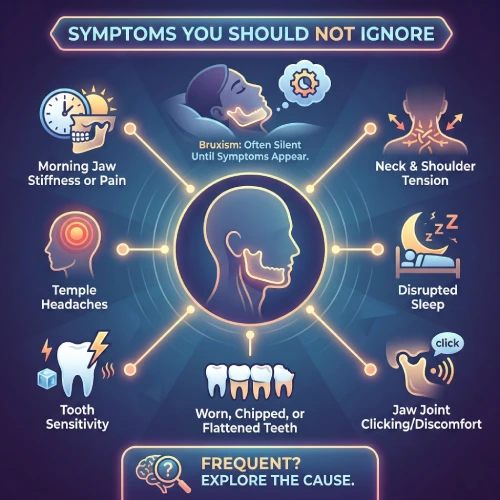
Many people with bruxism do not realise it until symptoms appear. Understanding these early signs helps you act before the condition worsens.
Common symptoms include:
• Jaw stiffness or pain, especially in the morning
• Headaches at the temples
• Tooth sensitivity
• Worn, chipped, or flattened teeth
• Clicking or discomfort in the jaw joint
• Disrupted sleep
• Tension in the neck and shoulders
If these symptoms become frequent, it is worth exploring whether grinding is the cause.
How Stress Influences Bruxism
Stress-related bruxism is one of the most common types. When stress hormones rise, the body enters a state of tension. The jaw muscles tighten, and during sleep, this tension often becomes grinding. Even daytime clenching—pressing your teeth together unconsciously while concentrating—can lead to discomfort.
Emotional triggers such as anxiety, pressure at work, or major life changes can intensify grinding. This is why patients often notice an increase during exam seasons, deadlines, or stressful phases of life.
Managing stress is an important step when you want to prevent bruxism. Relaxation techniques, improved sleep routines, and mindful breathing all help reduce jaw tension.
Bite Alignment and Jaw Position
Sometimes the structure of the bite contributes to grinding. If the teeth do not meet evenly, the jaw may attempt to realign during sleep, causing friction between the teeth. Over time, this can wear enamel, flatten molars, and create sensitivity.
Patients with bite issues may benefit from orthodontic evaluation or minor bite adjustments to reduce excessive pressure. A balanced bite improves comfort and lowers grinding frequency.
Lifestyle Habits That Trigger Grinding
Small habits can have a significant effect on grinding patterns. Caffeine increases muscle activity, making grinding more likely during sleep. Alcohol disrupts sleep cycles and increases clenching episodes. Smoking and recreational substances also increase jaw activity and tension.
If you notice grinding becomes worse after consuming these substances, a lifestyle adjustment may help reduce symptoms.
The Role of Sleep Disorders
Sleep-related breathing disorders, such as sleep apnoea, are strongly linked to bruxism. When oxygen levels drop during sleep, the body responds by tightening the jaw muscles and clenching the teeth. This pattern repeats throughout the night.
If you snore loudly, wake up frequently, or feel tired despite sleeping long hours, assessing for a sleep disorder may be helpful. Addressing sleep quality often reduces grinding.
How to Prevent Bruxism and Protect Your Teeth
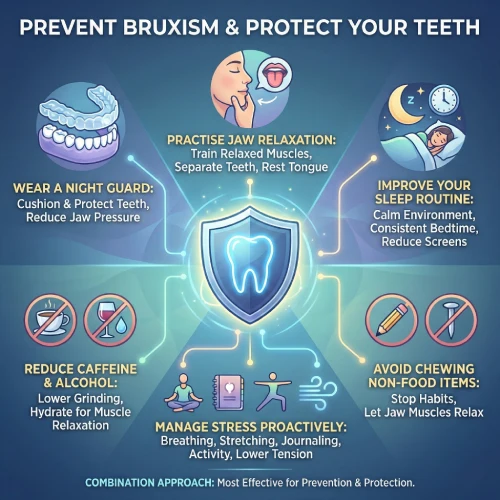
Preventing grinding involves reducing triggers, protecting the teeth, and supporting healthy muscle relaxation. A combination approach is usually most effective.
Wear a Night Guard
Night guards for teeth grinding act as protective cushions between the teeth. They prevent enamel wear, reduce pressure on the jaw joints, and minimise the long-term impact of grinding. Custom night guards offer the best comfort and protection.
Practise Jaw Relaxation
Training your jaw to stay relaxed throughout the day reduces clenching. Gently resting the tongue on the roof of the mouth, lightly separating the teeth, and relaxing the facial muscles help break grinding habits.
Improve Your Sleep Routine
A calm sleep environment, consistent bedtime, and reduced screen time help prevent night-time tension. Better sleep reduces muscle activity during the night.
Reduce Caffeine and Alcohol
Cutting down on coffee, energy drinks, and late-night alcohol greatly reduces grinding episodes. Hydration supports muscle relaxation and reduces tension.
Manage Stress Proactively
Breathing exercises, stretching, journaling, and regular physical activity lower stress levels and keep jaw muscles relaxed. When stress triggers are addressed, grinding naturally reduces.
Avoid Chewing Non-Food Items
Chewing pencils, pens, or nails trains your muscles to stay tight. Keeping your mouth free from these habits helps your jaw relax.
Long-Term Effects If Grinding Is Not Treated
Without treatment, teeth grinding can lead to several complications, including:
• Cracks, fractures, or chipped teeth
• Severe enamel wear leading to sensitivity
• Gum recession
• Jaw joint (TMJ) disorders
• Facial soreness
• Difficulty chewing
• Disturbed sleep for you and your partner
The earlier bruxism is addressed, the easier it is to protect the teeth from long-term damage.
When You Should See a Dentist
While occasional grinding is normal, persistent symptoms should be evaluated. You should book a consultation if you notice:
• Pain in the jaw that lasts several days
• Teeth that appear shorter or flatter
• Sharp sensitivity when chewing
• Clicking, popping, or locking of the jaw
• Poor sleep quality or frequent headaches
A dentist can identify whether grinding is mild, moderate, or severe and recommend the appropriate bruxism treatment in Dubai.
Treatment Options for Bruxism
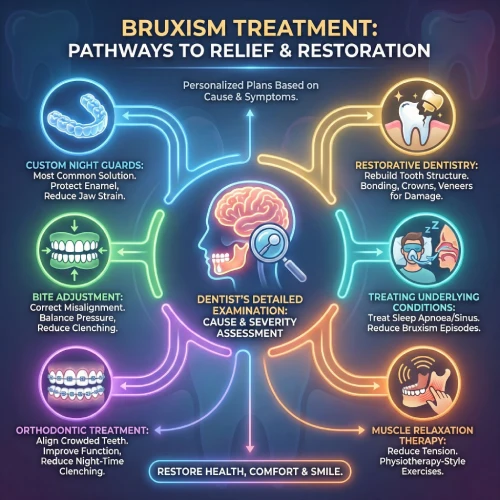
Treatment depends on what caused the grinding and how advanced the symptoms are. Dentists often begin with a detailed examination and may recommend one or more of the following:
Custom Night Guards
The most common solution for grinding. These guards protect enamel and reduce strain on the jaw muscles.
Bite Adjustment
If misaligned teeth contribute to grinding, adjusting the bite helps balance pressure and reduces clenching.
Orthodontic Treatment
Crowded or uneven teeth can cause grinding. Aligning the teeth may improve function and reduce night-time clenching.
Muscle Relaxation Therapy
Dentists sometimes recommend physiotherapy-style exercises to reduce muscle tension around the jaw.
Treating Underlying Conditions
If sleep apnoea or sinus issues contribute to grinding, treating those conditions helps reduce bruxism episodes.
Restorative Dentistry
If grinding has already caused damage, restorative treatments like bonding, crowns, or veneers may be needed to rebuild tooth structure.
Supporting Your Jaw Health Through Daily Habits
Protecting your teeth from grinding involves consistent care. Paying attention to your jaw position during the day prevents overactivity. Keeping teeth slightly apart, lips closed, and tongue relaxed reduces clenching pressure.
Hydration is also important. Dry muscles fatigue more quickly, which increases tension. Drinking enough water supports muscle relaxation and tissue health.
Cold compresses help when the jaw feels sore, while warm compresses loosen stiff muscles. Alternating the two can make a noticeable difference after heavy grinding episodes.
Creating a Personalised Approach to Grinding Prevention
Every patient has a unique pattern of bruxism. Some grind loudly, others silently. Some have emotional triggers, while for others it is physical or structural. Creating a personalised plan ensures long-lasting protection.
A tailored approach may include:
• Stress management guidance
• A custom night guard
• Lifestyle adjustments
• Bite correction
• Sleep disorder screening
• Specific jaw exercises
With a structured plan, grinding becomes manageable, and long-term complications can be avoided.
Conclusion
Teeth grinding can lead to jaw pain, enamel wear, and long-term dental issues, but early diagnosis and personalised care make prevention straightforward. For expert support and bruxism treatment in Dubai, you can Call Us or text us on WhatsApp to book an appointment at MedDental Clinic Dubai. The team is ready to help you prevent bruxism and protect your smile with custom night guards and tailored care.