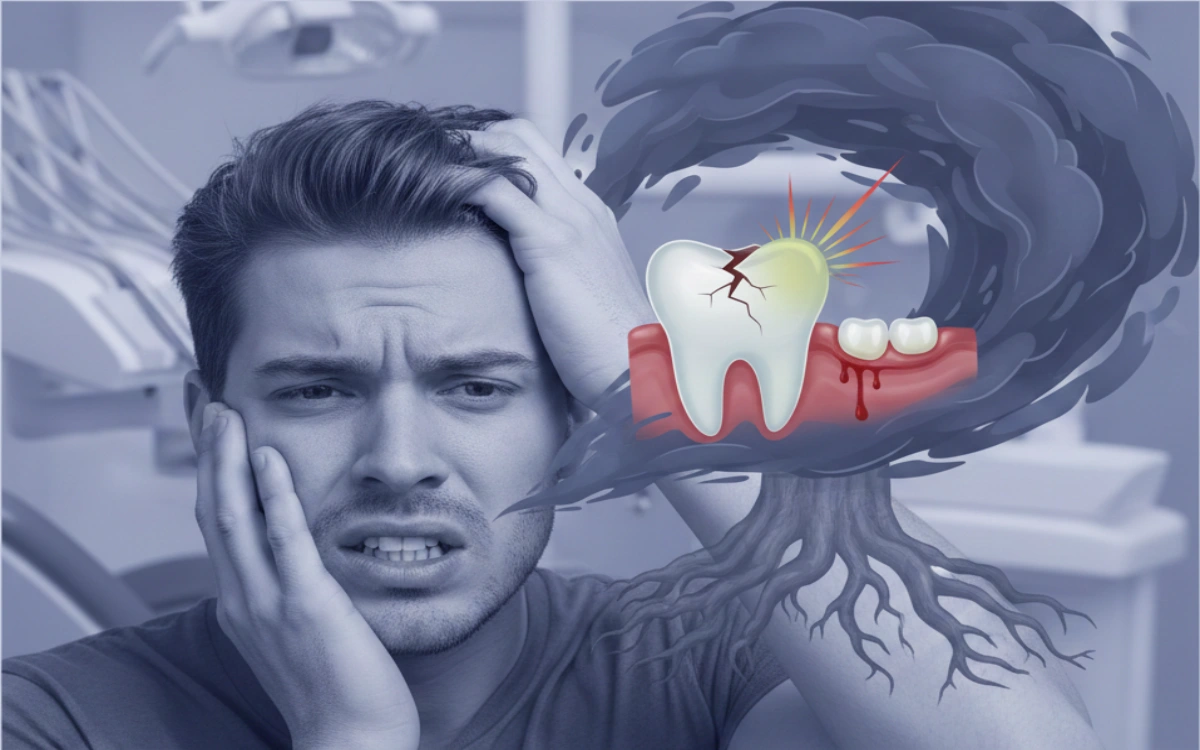

Many patients are surprised to learn how quickly stains appear on their teeth, even when brushing regularly. The truth is that foods that stain teeth are more common than most people realise, and many of them are everyday favourites. Over time, even small exposures can leave the enamel dull, discoloured, or unevenly tinted.
Understanding how staining works helps you make better choices without giving up the foods and drinks you enjoy. The goal is not restriction but awareness. Once you know what causes teeth discolouration, you can prevent it, protect your enamel, and maintain a brighter smile throughout the year.
The problem is not always your brushing habits. It is often hidden in your diet, your routine, and the way certain pigments and acids interact with enamel. With a few simple changes, you can enjoy your meals and beverages while keeping stains under control.
Why Do Certain Foods and Drinks Cause Tooth Staining?
Tooth staining usually happens for three reasons: pigmentation, acidity, and the porous nature of enamel. When a food or drink contains dark pigments, it holds the potential to leave visible marks on your teeth.
Acidic items soften the enamel, making it easier for stains to penetrate. At the same time, enamel naturally has microscopic pores, which absorb colours from foods over time. The combination of these factors leads to discolouration that becomes more stubborn the longer it remains.
Dark compounds called chromogens, natural tannins, and artificial dyes are the biggest culprits. The more frequently you consume these substances, the more noticeable the stains become.
The Most Common Foods That Stain Teeth
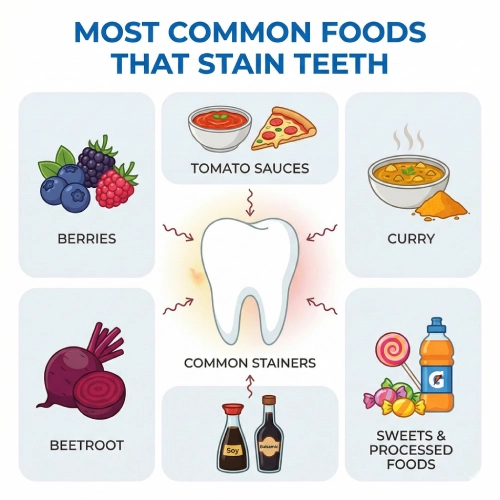
Some foods are more potent than others when it comes to staining. While they are not harmful to your health, they can affect the brightness of your smile.
Berries
Blueberries, blackberries, pomegranates, and raspberries are rich in antioxidants but packed with deep pigments. Their skin and juice cling to the enamel, leading to noticeable staining.
Tomato-Based Sauces
Tomatoes are highly acidic and contain strong red pigments. Pasta sauces, pizza toppings, and stews that use tomato paste can cause staining, especially if consumed frequently.
Curry
Curry powders contain turmeric and other strong spices. While healthy and flavourful, these spices have intense colouring agents that can yellow the teeth over time.
Beetroot
Beetroot is one of the brightest staining foods. Its deep purple pigments quickly absorb into porous enamel, leaving behind a long-lasting tint.
Soy Sauce and Balsamic Vinegar
Both of these ingredients contain dark colouring and acidic properties. Even small quantities during meals may gradually darken the teeth.
Sweets and Processed Foods
Candies, ice lollies, coloured yoghurts, sport drinks, and sweets often contain artificial dyes. These synthetic colours stick to enamel more aggressively than natural pigments.
The Most Common Drinks That Cause Tooth Staining
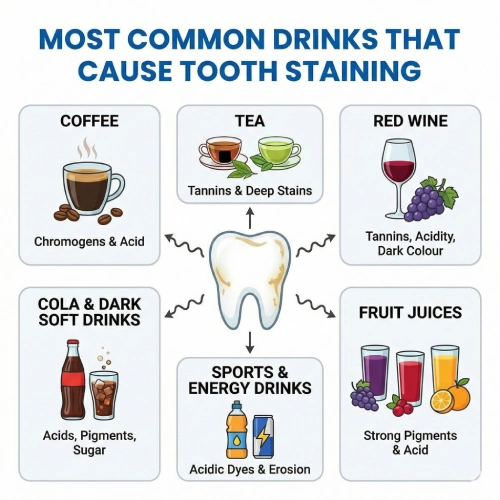
Drinks stain the teeth faster than foods because liquids spread and coat the entire mouth. They seep into microscopic enamel grooves and leave behind visible marks.
Coffee
Coffee is one of the most common reasons patients struggle with coffee stains on teeth. Its dark colour, high chromogen content, and acidity create the perfect environment for discolouration. Even one cup a day can gradually tint enamel.
Tea
Tea may seem lighter than coffee, but it often causes deeper stains. Black tea contains tannins, which latch onto the enamel. Green tea stains as well, although the colour may appear more grey than brown.
Red Wine
Red wine teeth stains are very common due to the drink’s tannins, acidity, and dark colour. When enamel softens after the first sip, pigments penetrate quickly.
Cola and Dark Soft Drinks
Cola-based drinks contain colouring agents, acids, and sugar. The combined effect softens enamel and deposits dark pigments, making stains more noticeable.
Sports Drinks and Energy Drinks
These drinks may look harmless, but many contain acidic dyes that weaken enamel and cause bright or patchy discoloration.
Fruit Juices
Grape, cranberry, blueberry, and pomegranate juices contain strong pigments. Citrus juices, although light in colour, soften enamel and make it easier for other stains to settle.
Foods That Surprisingly Do Not Stain Teeth
Some foods are mistakenly thought to stain but actually do not cause significant discolouration.
Milk, cheese, rice, apples, bananas, cauliflower, and white fish are stain-neutral options. High-calcium foods can even help protect the enamel by strengthening its outer layer.
However, the key is pairing. Eating a staining food and then following it with a protective food, such as cheese, can reduce the staining impact.
How to Prevent Food Stains Teeth Even If You Love Colourful Meals
You do not need to avoid your favourite foods completely. With a few practical habits, you can enjoy your meals while reducing the risk of stains.
Drink Water During and After Meals
Water helps rinse pigments away before they settle. It is especially useful after drinking wine, tea, or soft drinks.
Use a Straw for Dark Beverages
Straws help liquids bypass the teeth, reducing the exposure of enamel to staining pigments. This is helpful for coffee, iced tea, soft drinks, and fruit juices.
Brush at the Right Time
Brushing immediately after acidic food or drink can damage enamel because it is temporarily softened. Wait at least 30 minutes before brushing to avoid erosion.
Rinse Before You Brush
If you cannot brush yet, rinse with water. This removes some pigments and protects enamel until brushing is safe.
Eat Crunchy Fruits and Vegetables
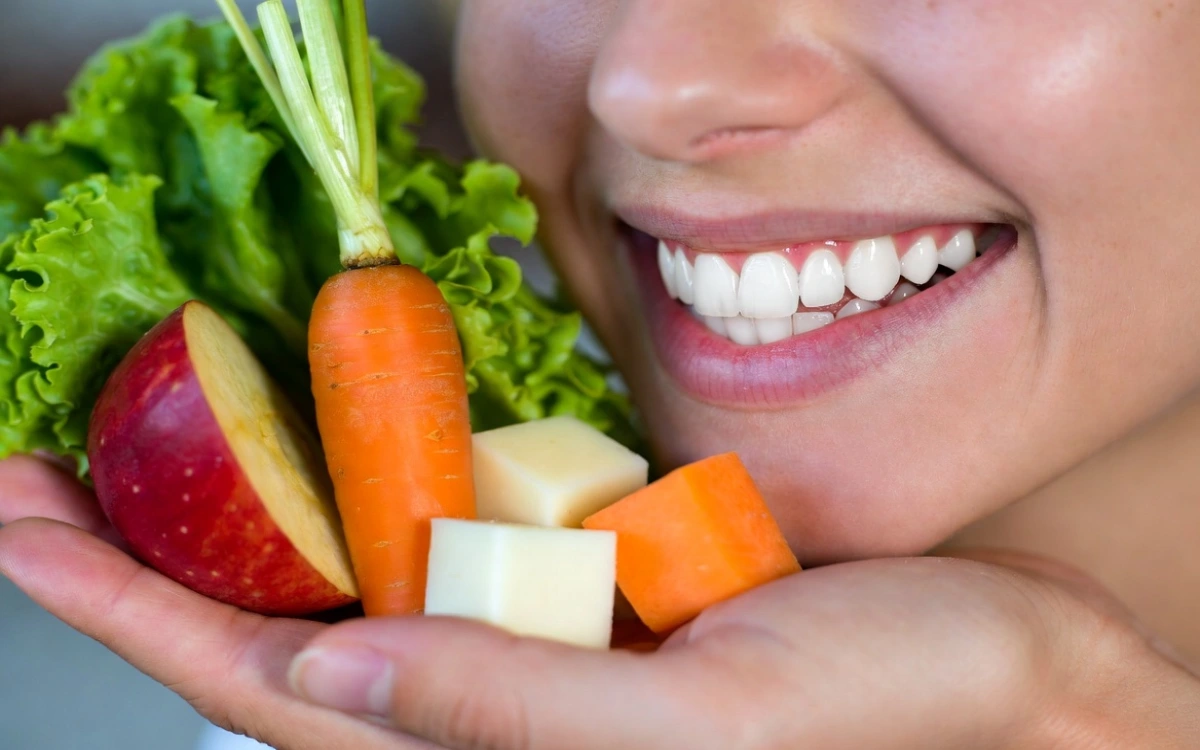
Apples, carrots, celery, and cucumbers help scrub the enamel naturally thanks to their fibrous texture.
Pair Staining Foods With Dairy
Cheese, milk, and yoghurt help balance acidity and reduce staining effects.
Maintain Professional Cleaning Appointments
Regular scaling and polishing help remove deep stains that daily brushing cannot reach.
Why Some Teeth Stain Faster Than Others
Not everyone experiences staining to the same degree. Several factors influence how quickly discolouration appears.
Enamel Thickness
People with naturally thinner enamel show stains more easily because the underlying dentine colour becomes more visible.
Mouth Acidity
A more acidic oral environment weakens enamel and accelerates staining.
Dry Mouth
Reduced saliva means fewer natural rinsing and cleansing actions, allowing pigments to settle more easily.
Smoking
Tobacco contains tar and nicotine, which produce some of the darkest stains known in dentistry.
Oral Hygiene Habits
Irregular brushing or poor technique gives stains more time to settle into enamel.
Understanding these factors helps you take personalised steps to protect your smile.
When Staining Becomes a Sign of Something Else
Not all stains result from food and drinks. Sometimes, discolouration may indicate another underlying issue.
Fluorosis
White or brown spots can appear due to excess fluoride exposure during tooth development.
Enamel Erosion
Thinning enamel exposes dentine, making teeth appear yellow.
Medication-Related Staining
Some antibiotics, antihistamines, and blood pressure medications may darken teeth.
Ageing
With time, enamel naturally thins and dentine becomes more visible.
If your stains appear uneven, patchy, or sudden, it is helpful to consult a dentist for assessment.
Treatment Options for Stained Teeth
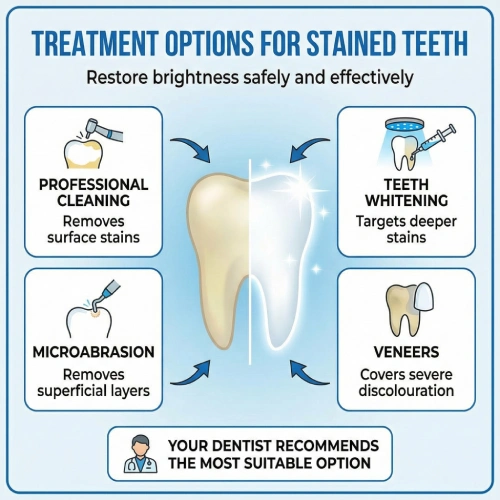
Stains respond differently depending on their cause. The right treatment helps restore brightness safely and effectively.
Professional Cleaning
This removes surface stains caused by food, drinks, and smoking.
Teeth Whitening
In-office whitening treatments target deeper stains that cannot be removed through cleaning alone. They provide fast, visible results.
Microabrasion
This removes superficial enamel layers to reduce certain types of patches or spots.
Veneers
For severe discolouration, veneers provide a long-term cosmetic solution by covering the tooth with a thin, customised layer.
Your dentist will recommend the most suitable option depending on the type and severity of staining.
How to Maintain Whiter Teeth for the Long Term
Adopting simple habits helps protect your teeth from repeated discolouration.
Stay hydrated, maintain regular brushing, floss daily, limit your intake of staining foods, and schedule consistent dental evaluations. A routine whitening maintenance plan also helps you keep your smile bright throughout the year.
Conclusion
Foods that stain teeth and many popular drinks can make your smile appear dull over time, but small daily habits help you manage and prevent discolouration effectively. For personalised dental advice and whitening options, you can Call Us or text us on WhatsApp to book an appointment at MedDental Clinic Dubai. Protect your smile with expert guidance and schedule your consultation today.