

Many people notice that tooth sensitivity becomes more noticeable as temperatures drop. Cold weather, chilled drinks, and dry air can make everyday tasks like sipping water or breathing through your mouth suddenly uncomfortable. During winter, even those who do not usually experience discomfort may find that their teeth feel sharper, more reactive, or sore.
This seasonal sensitivity is incredibly common. Winter changes how your teeth and gums respond to temperature, exposing underlying issues or highlighting existing weaknesses in the enamel. The good news is that with the right habits and treatments, you can reduce discomfort and protect your teeth throughout the colder months. Understanding what triggers sensitivity and how to care for your teeth during winter can help you stay comfortable and prevent long-term damage.
Why Teeth Become More Sensitive in Winter
Cold air and chilled temperatures cause your teeth to expand and contract. This small change places pressure on the tiny tubes inside the dentine, which are connected to the nerves. When this happens, even a quick breath of cold air can trigger discomfort.
Winter also affects saliva production. Dry air reduces moisture in the mouth, making your enamel more exposed and increasing the likelihood of irritation. People often drink more hot beverages during colder months, and frequent temperature changes between hot and cold drinks can worsen sensitivity further.
Those with gum recession, worn enamel, cavities, or untreated dental problems often feel the effects more strongly. Understanding the causes of tooth sensitivity during winter helps you identify what to address first.
Common Causes of Tooth Sensitivity
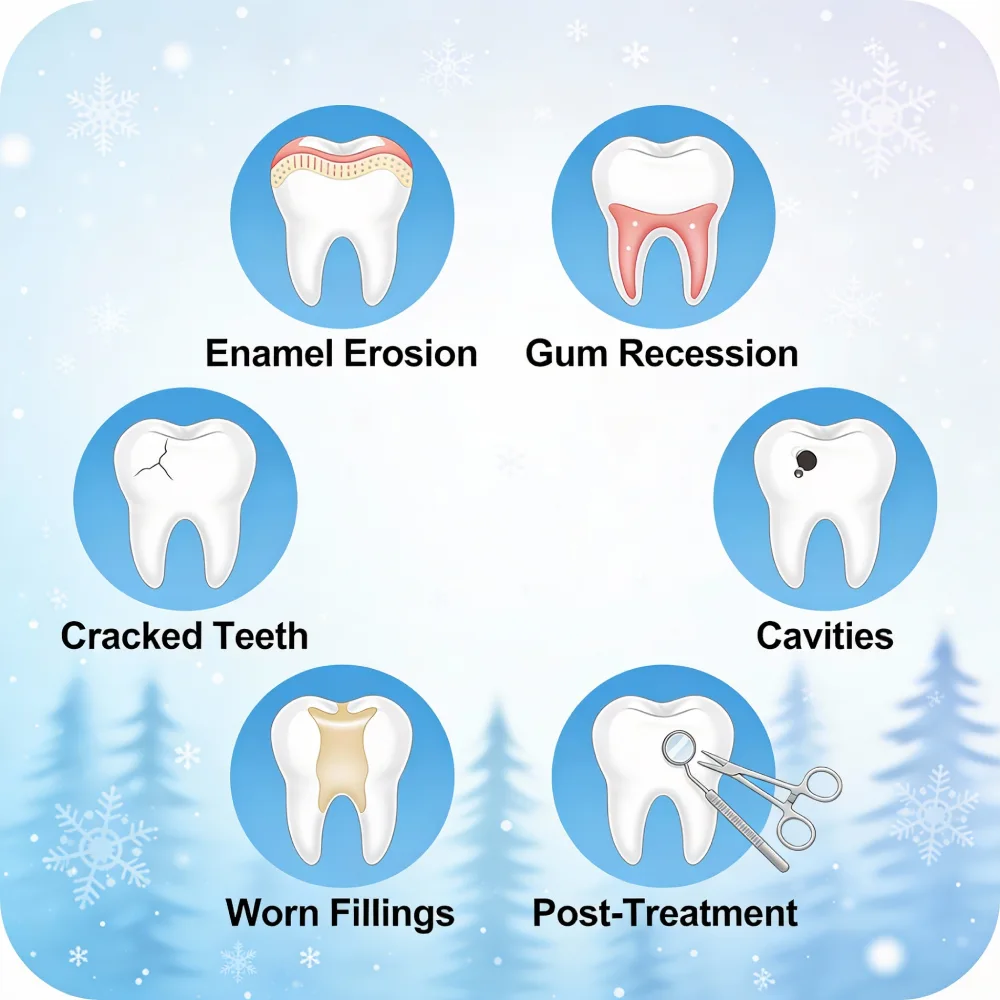
Teeth can become sensitive for several reasons, and winter tends to amplify these problems. Here are the most common causes.
Enamel Erosion
The outer layer of your tooth, known as enamel, protects the nerves inside. When enamel wears away due to acidic foods, grinding, or brushing too hard, the dentine becomes exposed. This is one of the leading causes of sensitivity.
Gum Recession
Gums can recede due to age, brushing habits, or gum disease. When they pull away from the tooth, the roots become exposed. Tooth roots do not have enamel, so they are naturally more sensitive.
Cavities and Tooth Decay
Even small cavities can cause sudden sensitivity, especially to cold or sweet foods. During winter, these sensations often feel stronger.
Cracked Teeth
Microcracks in teeth allow cold air and fluids to reach the nerves more easily. These cracks often happen due to grinding or biting hard foods.
Worn Dental Fillings
Over time, fillings can loosen or wear down. When this happens, temperature changes reach the inner layers of the tooth sooner.
Post-Treatment Sensitivity
Treatments such as whitening, fillings, or professional cleanings can temporarily cause sensitive teeth, which may feel worse in cold weather.
Understanding the root cause is essential because it helps guide the correct dental sensitivity treatment.
How Winter Weather Makes Sensitive Teeth Worse
Winter affects the mouth in ways that many people do not immediately recognise.
Cold Air Triggers Nerve Responses
When you breathe through your mouth, cold air reaches the teeth directly. This can cause sharp sensations, especially if dentine is exposed.
Frequent Hot Drinks
Many people switch between hot drinks and cold weather repeatedly. This temperature contrast places extra stress on enamel and nerves.
Reduced Saliva Flow
Heated indoor environments dry out the mouth. Saliva protects your teeth, so when production drops, your teeth lose a layer of natural defence.
Increased Sinus Pressure
Winter sinus infections and congestion can make upper teeth feel more sensitive because the roots sit close to the sinus cavity.
These seasonal changes help explain why even mild sensitive teeth can suddenly feel worse during colder months.
Practical Ways to Manage Sensitive Teeth During Winter
The right habits can provide relief daily and prevent sensitivity from worsening. These simple changes fit easily into your winter routine.
Switch to a Toothpaste for Sensitivity
Desensitising toothpaste blocks the nerve pathways inside the tooth and reduces discomfort gradually with consistent use. Look for formulas specifically designed to manage sensitive teeth during winter.
Use a Soft-Bristled Toothbrush
Hard bristles wear down enamel and irritate the gums. A soft toothbrush cleans effectively without causing additional damage.
Avoid Brushing Too Hard
Many people brush vigorously thinking it improves cleaning. In reality, gentle circular movements protect the enamel and gums better.
Breathe Through Your Nose
If you find cold air triggers sensitivity, try to keep your mouth closed while outdoors. This prevents direct exposure to cold temperatures.
Rinse With Fluoride Mouthwash
Fluoride strengthens enamel and protects against the effects of cold weather and acidic foods. It also helps reduce nerve sensitivity.
Limit Acidic Foods
Citrus fruits, soft drinks, tomatoes, and vinegar-based foods weaken enamel. Reducing them during winter helps prevent flare-ups.
Stay Hydrated
Water keeps the mouth moist, supports saliva flow, and protects enamel. Staying hydrated is especially important in winter, when indoor air is dry.
Use Lukewarm Water When Brushing
Cold water can trigger discomfort in sensitive teeth. Using lukewarm water reduces irritation while maintaining effective cleaning.
Foods and Habits That Make Winter Sensitivity Worse
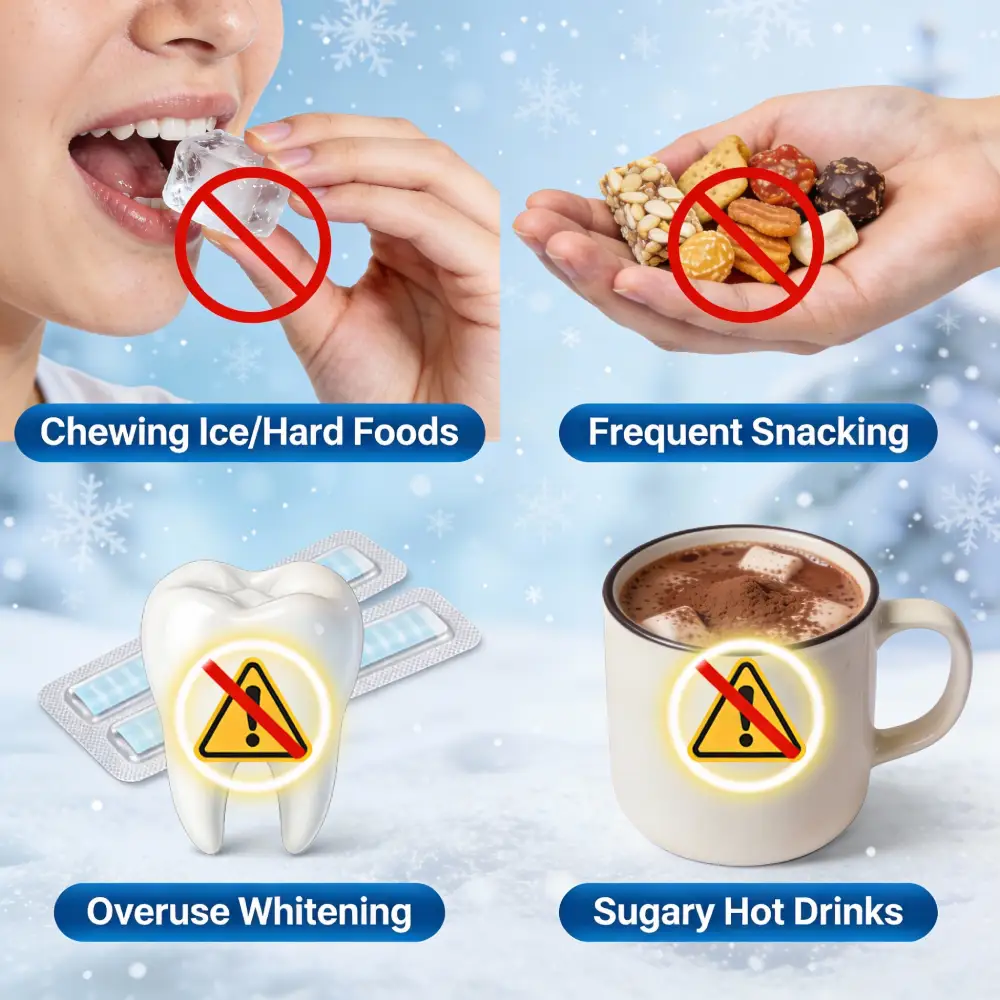
Some daily habits may seem harmless but significantly worsen sensitivity during colder months.
Chewing Ice or Very Hard Foods
Winter-themed treats or overly chilled foods place unnecessary pressure on enamel.
Frequent Snacking
Constant snacking reduces saliva flow and increases exposure to acids.
Overuse of Whitening Products
Whitening strips, gels, and certain toothpastes can temporarily weaken enamel and increase sensitivity.
Sugary Hot Drinks
Hot chocolates, flavoured lattes, and sweetened teas coat the teeth and weaken enamel when consumed frequently.
Being aware of these habits helps you manage sensitivity more effectively.
When Sensitive Teeth Indicate a Bigger Problem
Sometimes, sensitivity is not just seasonal. It may point to an underlying dental issue that requires professional care.
Signs You Should Not Ignore
• Sensitivity that worsens over time
• Pain while chewing
• Sensitivity in only one tooth
• Visible cracks or chips
• Swollen or bleeding gums
• Painful response to sweet foods
These symptoms can indicate decay, gum disease, or an infection. Early treatment prevents complications and protects long-term dental health.
Dental Sensitivity Treatment Options
If your sensitivity does not improve or becomes more frequent, your dentist may recommend a targeted treatment to strengthen the enamel and protect the nerves.
Fluoride Varnish
A professional fluoride application strengthens enamel and reduces nerve exposure. Many patients feel immediate improvement.
Desensitising Agents
Certain in-clinic treatments seal dentine tubules and block sensitivity triggers.
Gum Treatment
If gum recession is the cause, gum therapy helps reduce exposure and protects tooth roots.
Fillings or Bonding
When cavities or cracks cause sensitivity, bonding materials or fillings restore structure and reduce discomfort.
Night Guards
If grinding is the cause, a night guard prevents further enamel wear.
Root Canal Treatment
In cases of severe nerve exposure or infection, a root canal eliminates sensitivity at its source.
Your dentist will recommend the most suitable option based on the cause of your symptoms.
How to Prevent Sensitivity in the Future
Even once winter passes, maintaining a consistent routine helps keep your teeth strong and comfortable.
Stay mindful of brushing habits, choose enamel-friendly foods, maintain hydration, attend regular dental appointments, and protect your teeth from grinding and erosion. Winter may amplify sensitivity, but simple long-term practices help you maintain strong enamel all year round.
Regular professional cleanings and assessments also help detect early signs of enamel loss before discomfort begins.
Conclusion
Tooth sensitivity tends to worsen during colder months, but with the right habits and timely care, you can protect your enamel and stay comfortable throughout winter. For personalised assessment and dental sensitivity treatment, you can Call Us or text us on WhatsApp to book an appointment at MedDental Clinic Dubai. The team is ready to help you manage sensitive teeth and keep your smile healthy through every season.